


The World in a Glass - Let’s Talk Prosecco
WORDS: Ange Seddon
Bursting The Bubble On Prosecco
My first experience of prosecco was way back in 2007 with my friend Millie. She was a force of nature and incredibly intelligent. We shared a love of all things Italian, but her knowledge and experience were way beyond mine at the time. Anyway, a new upmarket Italian restaurant had opened nearby, so of course we had to try it out. We arrived early so waited at the bar for our table. I was about to open my mouth and order my go-to at the time, Pinot Grigio (don’t judge, I’ve learned a lot since then) when Millie gently put her hand on my arm to stop me and quietly, but firmly said, “Let me order, my sweet.”
In crisp, perfect Italian she said “Due bicchieri di prosecco, per favore.” The bartender beamed at her request, brought out two pre-chilled flutes, and started to pour the golden, effervescent nectar into the glasses. “That’s more like it,” said Millie.
Bam! I was hooked. I must stress, this was before prosecco became mainstream, the drink of the hen do, the bottomless brunch, the sparkling afternoon tea and every other girly get together in between. At the time, no one knew prosecco would become so big. But Millie did. We lost Millie a few years ago now, but I will always be grateful for what she taught me. She encouraged me to continue learning and always believed in me. It is just a shame I didn’t buy prosecco shares back then!
So, Let’s Talk Prosecco
It literally exploded onto the market (well, it does if you don’t chill it properly) and the hospitality scene around 2008 as an affordable alternative to champagne. Though let me be clear, they are two quite different beasts, so please do not confuse them. But it was the celebratory style of the bubbles that made it popular. There was a strong supermarket and bar push that made the UK one of the largest export markets for prosecco. It has a lighter, more fruity taste and more importantly, a lower price point, making it an accessible ‘luxury’ drink.
Champagne is created by a second fermentation in the bottle called the Traditional Method (I have talked about this in detail – WIAG December 2024) while prosecco has its second fermentation in a large tank. It is called the Charmat or Martinotti method. The Italian Dr Federico Martinotti perfected the process in the late 1800s. It protects the fruit flavours making the wine fresh tasting, floral and crisp. This is not necessarily inferior, but it just produces a fresh style of sparkling wine.
Confusing Labelling
European wine labels can be confusing. Firstly, they never use the name of the actual grape, they name a place or a region, and while the grape itself used to be called prosecco, it was changed to Glera to differentiate between the place and the grape. The glera grape has the primary flavours of green apple, melon, pear and is light bodied.
Also, we need to clarify the sweetness levels. Part of the reason I went off prosecco was the fact that the majority I bought or tried in a restaurant was too sweet, despite me seeing ‘extra dry’ or ‘dry’ on the label. So, let’s delve a little deeper and see the actual sugar levels in the various names. These are amounts in grams per litre
Brut Nature – under 3g
Extra Brut – 3-6g
Brut – under 12g
Extra Dry – 12-17g
Dry – 17-32g
Demi-sec – 32-50g
Dolce – over 50g
You can see how it’s confusing, in my mind the word dry means no sugar, but the Italians seem to like to mess with us. The wines I thought I was choosing turned out to be sweeter than I was expecting. Most of these sweeter wines are made for the mass market and made for quantity over quality.
Also, not all proseccos are fully sparkling. The categories you may spot on a label are.
Spumante – fully sparkling
Frizzante – lightly sparkling
Tranquillo – completely still.
How to choose well
What should we be looking out for, in order to make better choices?
In Italian laws, wines with DOC or DOCG on the paper strip on the neck of the bottle denote that these wines are subject to strict regulations regarding geographical boundaries, specific grape varieties allowed, production and bottling stipulations.
DOCG Superiore has even stricter quality standards and usually means that the vineyards are on steeper slopes meaning that they are often hand harvested with lower yields, ramping up the quality of the wine produced. The designated area is set in the northeast of Italy and runs between the Dolomites and the Adriatic Sea.
The top-flight regions to look for are:
Conegliano Valdobbiadene Prosecco Superiore DOCG – this is beautifully fruity and aromatic wine.
Asolo Prosecco Superiore DOCG – this is drier, more mineral and crisp.
There is also a tiny ‘Grand Cru’ zone within CV with only 100 hectares of vineyards producing, arguably, the best prosecco you can get.
Valdobbiadene Superiore Di Cartizze DOCG (in Brut or Dry styles). This is quite different from your normal prosecco with riper fruit flavours, floral and slight honeyed notes. Softer and rounder with silky bubbles, but most are not bone dry and this is by design made to feel luxurious and smooth rather than dry and sharp.
While this is the most prestigious, it may not be to your taste, if like me, you prefer dryer styles.
So, there you have it. Are you a prosecco lover or have you moved on? Hopefully if you are the latter, you can dip back in, choosing the superior versions. It’s not just the reserve of brunch, it can go with spicy Thai, sushi, citrusy salads, fresh fruit and light appetisers. So, grab a bottle of the good stuff next time you are out. You won't regret it.
Recommendations
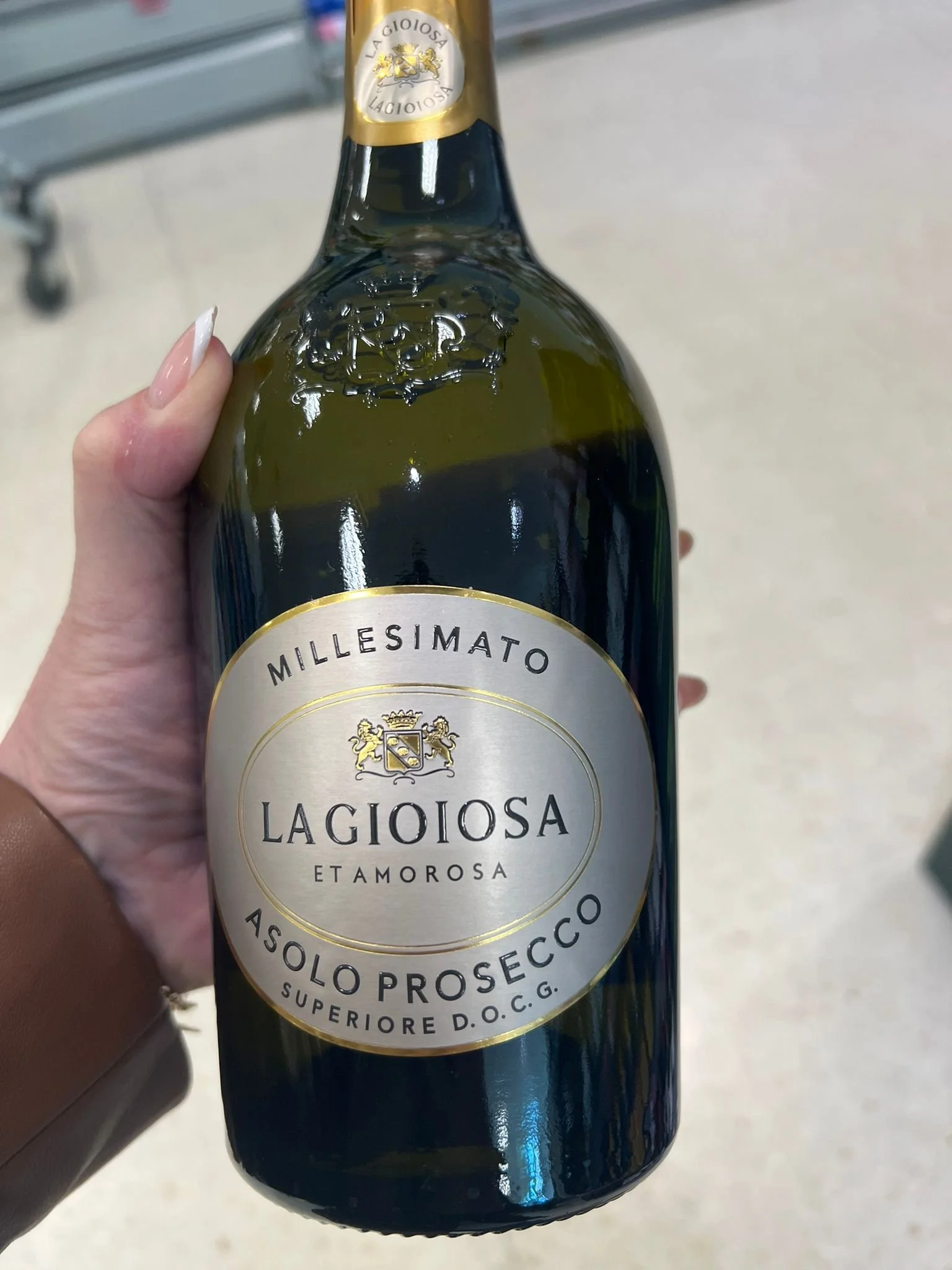
La Gioiosa Asolo Prosecco Superiore DOCG - £14 in Waitrose
This is a crisp pale straw yellow with fine yet persistent bubbles. It smells beautifully fruity of apples and pears and has a floral note. It tastes smooth and almost creamy with an elegant, vibrant, fresh taste.
Cin cin et salute a tutti,
Ange
Hungry for more?
Read up on the latest news, delicious eats, travel treats and seasonal style trends in FEATURES, or browse a curated selection of our FEATURED PRODUCTS, meander through our guide to the finest things to do in Cheshire and beyond in WHATS ON or partake in our COMPETITIONS.
About The CHESHIRE Magazine
We are the definitive guide to luxury lifestyle in the North West. Latest news, delicious eats, travel treats and seasonal style trends. The Cheshire Magazine is the largest luxury lifestyle title for the North West of England, dropping directly through the letterboxes of VIP subscribers from the Wirral to Greater Manchester plus all the villages and towns in between and digitally available as a subscription in print and digital on issuu.com worldwide. We specialise in connecting luxury brands to likeminded consumers.
If you are interested on how you can partner with The CHESHIRE Magazine, read more about us. Or get in touch to find out more about marketing, featuring or partnering with the Cheshire Magazine in print or online.